Statistics
In its statistical work, the Economic Commission for Latin America and the Caribbean (ECLAC) aims to promote the creation and use of internationally comparable, accurate and timely statistical information of relevance in the formulation, follow-up and evaluation of economic, social and environmental development policies in the region. This mission is based on three lines of action: (a) promoting best practices and disseminating internationally comparable methodologies; (b) providing advisory and technical cooperation services to strengthen countries’ technical and institutional capacities in the statistical field and facilitate horizontal cooperation and the sharing of expertise; and (c) carrying out methodological development activities (proposing and adapting indicators).
Activities

International Webinar on Measuring Illicit Financial Flows (IFFs)
The interregional Webinar, organized by ECLAC within the framework of the DA15 Development Account Project, brings together experts and representatives from different regions to advance the measurement and reduction of illicit financial flows. The initiative seeks to consolidate methodologies, validate national experiences, and strengthen statistical and institutional capacities, in line with indicator 16.4.1 of the Sustainable Development Goals.

Thirteenth meeting of the Statistical Conference of the Americas of ECLAC
The Thirteenth meeting of the Statistical Conference of the Americas of ECLAC will take place in Santiago, from November 25 to 27, 2025.
Taller subregional sobre el Marco Integrado de Información Geoespacial de las Naciones Unidas (UN-IGIF) para América Central y países latinoamericanos vecinos
Encuentro técnico subregional que reúne a países de América Central y la región latinoamericana para fortalecer sus capacidades en gestión de información geoespacial, avanzar en la implementación del UN-IGIF y consolidar estrategias nacionales orientadas a mejorar la gobernanza, interoperabilidad y uso de datos geoespaciales para el desarrollo sostenible.

Second technical meeting on special surveys and household consumption price validation of the International Comparison Program (ICP), Cycle 2024 - Latin America and the Caribbean
ECLAC, in its capacity as Regional Coordinator of the IPC for Latin America and the Caribbean, and the World Bank are convening the region's national teams for a new technical meeting to review the quality, consistency, and regional comparability of prices reported in special and consumption surveys of the IPC, within the framework of the 2024 cycle. This meeting is being held virtually.
News

CEPALSTAT updates and expands perception indicators based on international surveys
The CEPALSTAT platform has incorporated new information and updated historical series of perception indicators based on surveys such as LAPOP, Latinobarometer, and Gallup, strengthening the availability of comparable data on democracy, trust, security, and well-being in the region.

CEPALSTAT incorporates first regional series of indicators on disability
The Data and Statistical Publications Portal, CEPALSTAT, now features a new section dedicated to disability, which brings together comparable indicators for the region based on household surveys. This addition aligns with ECLAC's institutional commitments to strengthen statistical visibility and support the full inclusion of people with disabilities in Latin America and the Caribbean.
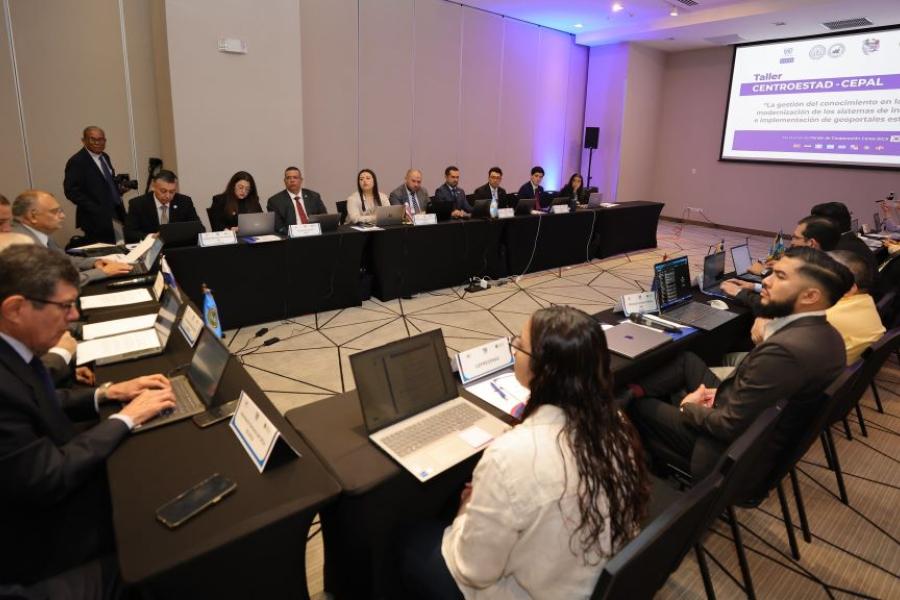
SICA countries strengthen capacities to modernize their information systems and statistical geoportals
The meeting in Panama City brought together national statistical offices to exchange experiences in knowledge management and modernization of data platforms, with the technical support of ECLAC.
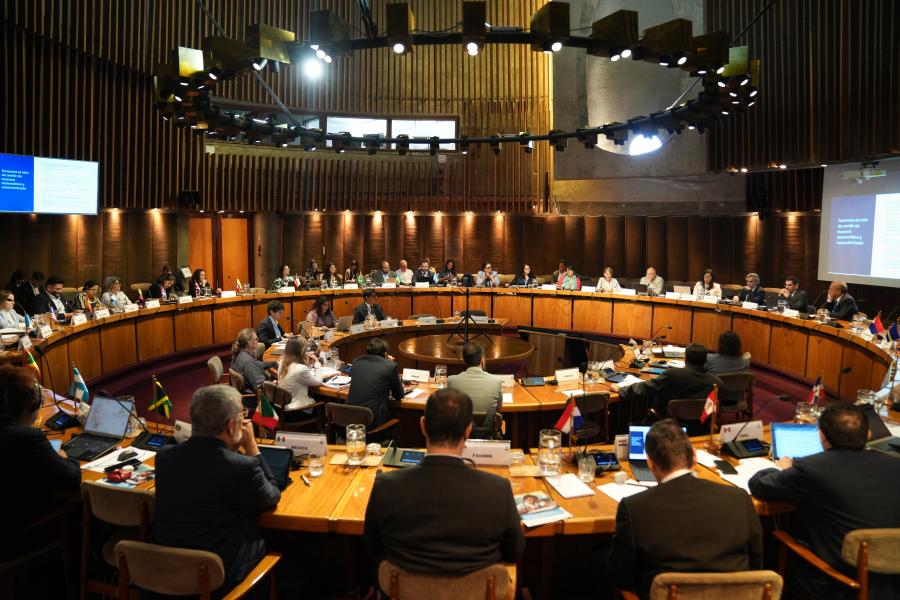
The Statistical Conference of the Americas Successfully Concluded its Thirteenth Meeting
As the event came to a close, countries recognized the importance of strengthening data governance and administration in national statistical systems by fostering regulatory and institutional frameworks.
Publication featured
Use of satellite imagery to produce regional statistics disaggregated by territory
In the information age, the production of official statistics has evolved significantly from the traditional approach of classical statistical operations. The use of non-traditional information…
Data and statistics
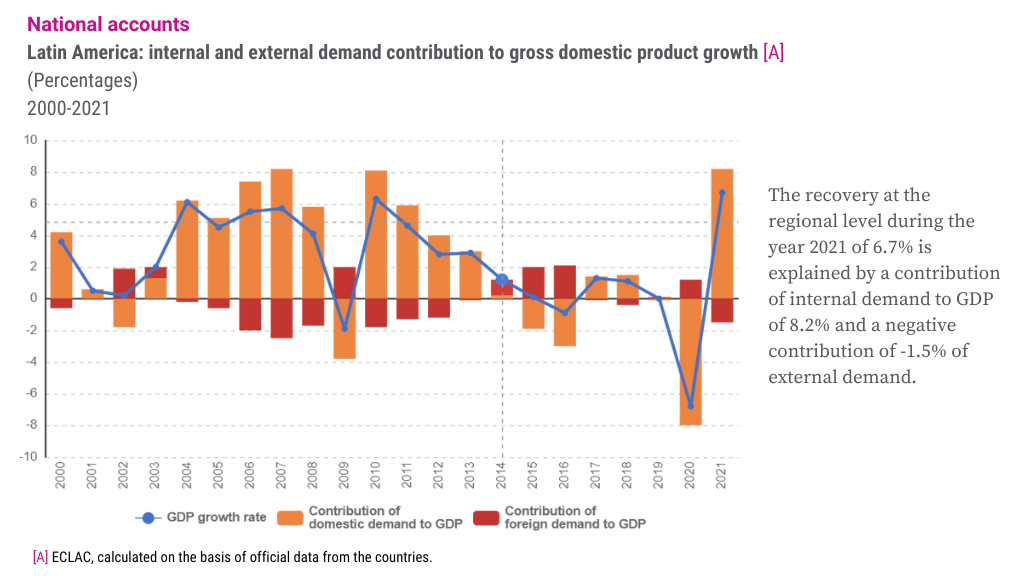
Latin America: internal and external demand contribution to gross domestic product growth
Video
Subsidiary Body



Infographic
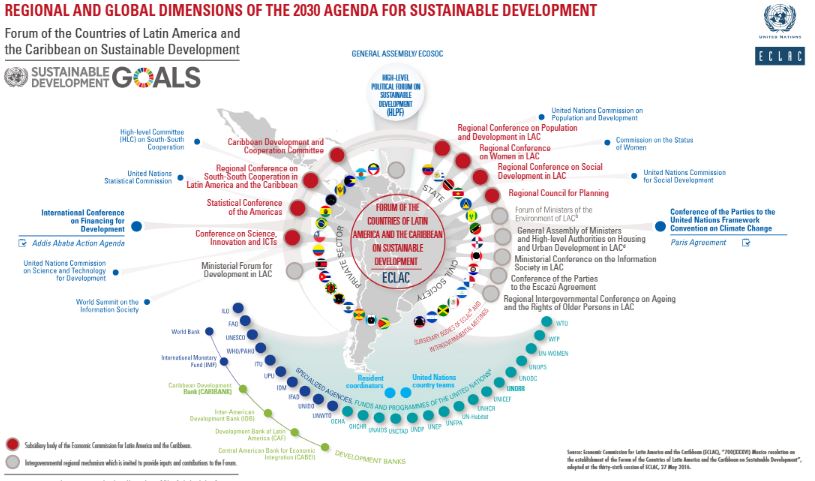
Regional and global dimensions of the 2030 Agenda for sustentainable development
Forum of the countries of Latin America and the Caribbean on Sustainable Development.