In response to the growing interest in the social and solidarity economy, ECLAC is putting forward proposals to strengthen the evidence base and institutional framework of the sector
Work area(s)
Topic(s)
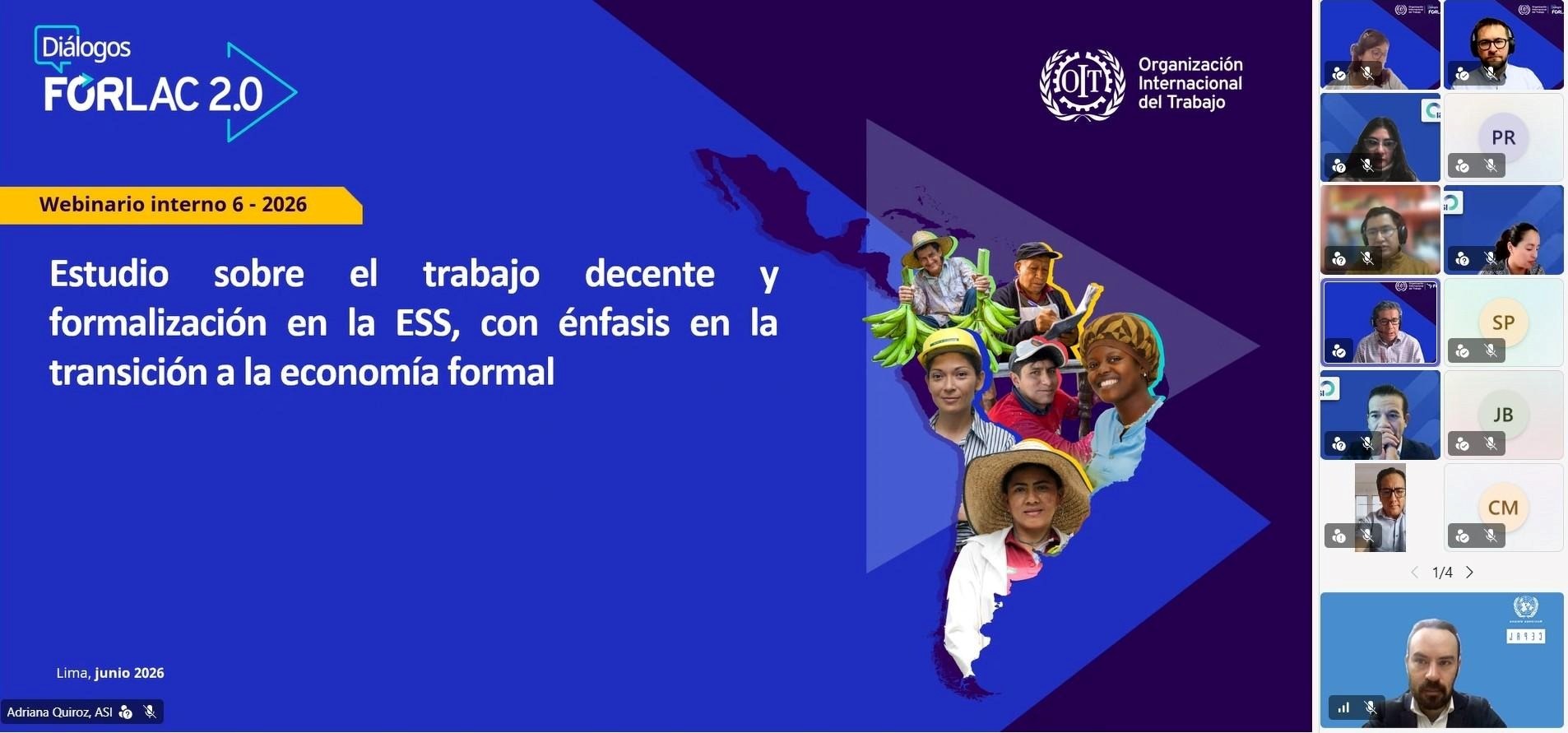
The social and solidarity economy is playing an increasingly important role in discussions on development policies in Latin America and the Caribbean. As interest in the sector grows, so does the need for evidence to help guide public decision-making. To that end, the International Labour Organization (ILO) convened experts for the FORLAC Dialogues to discuss the report Decent Work and Formalization in the Social and Solidarity Economy in Latin America and the Caribbean, an event at which ECLAC shared its main contributions on strengthening institutional frameworks and generating evidence for the sector.
Representing ECLAC, Felipe Correa, an official from the Productive Development and Business Division, commented on the report and emphasized that its preparation helps narrow a knowledge gap regarding a sector that remains underrepresented in regional analyses and statistics. “Our objective is to close the analytical gap that renders a large part of the sector invisible,” he said.
Correa noted that this line of work aligns with ECLAC’s efforts to incorporate the social and solidarity economy into productive development strategies by generating more evidence to support the design and strengthening of public policies.
A gradual path toward stronger institutional frameworks
During the dialogue, Correa also addressed the challenges associated with institutional frameworks for the sector. In this context, he argued that strengthening the social and solidarity economy should not depend solely on the approval of a framework law, but can also advance through regulatory instruments capable of building institutional capacity while broader consensus is developed for more comprehensive legislation.
As an example, he cited the experience of Costa Rica, where social and solidarity economy policies were developed over several years through ministerial decrees that enabled the creation of a specialized directorate within the Ministry of Labour, the establishment of an observatory, the development of a medium-term development plan, and the formation of an advisory council.
In his view, such experiences demonstrate that ministerial resolutions or decrees can serve as an intermediate step toward strengthening institutional frameworks, creating enabling conditions, and facilitating the implementation of specific programs while more robust legal frameworks are being developed.
“In some countries, a ministerial resolution could produce more tangible progress than a law without the institutional structures or instruments needed for its implementation,” he said.
The social and solidarity economy as a tool for formalization
Another key topic discussed was the role that the social and solidarity economy can play in promoting employment formalization, particularly in sectors where informality remains widespread, such as rural areas and commerce.
According to Correa, the sector’s strong territorial roots in areas where formal markets and government services are limited, together with its ability to foster collective action, promote participatory governance, and represent workers who have traditionally been excluded from social dialogue mechanisms, make the social and solidarity economy an important vehicle for productive and socio-labor inclusion.
The discussion also addressed the diversity of approaches to social enterprises and Benefit and Collective Interest (BIC) companies across the region. Correa noted that although the concept of the social enterprise as developed in Europe does not have a direct equivalent in Latin America and the Caribbean, the definition adopted by the ILO makes it possible to recognize similar experiences across different countries.
Correa concluded by emphasizing that achieving a better understanding of the social and solidarity economy in Latin America and the Caribbean remains a priority for ECLAC. He therefore welcomed forums such as the FORLAC Dialogues, which help strengthen the knowledge base and improve the design of public policies to support the development of the sector.
