Historia Oral | Martine Dirven’s Journey at ECLAC
Topic(s)
Former ECLAC official Martine Dirven reflects on how informal exchanges once sparked creativity, collaboration, and innovation across divisions at ECLAC.
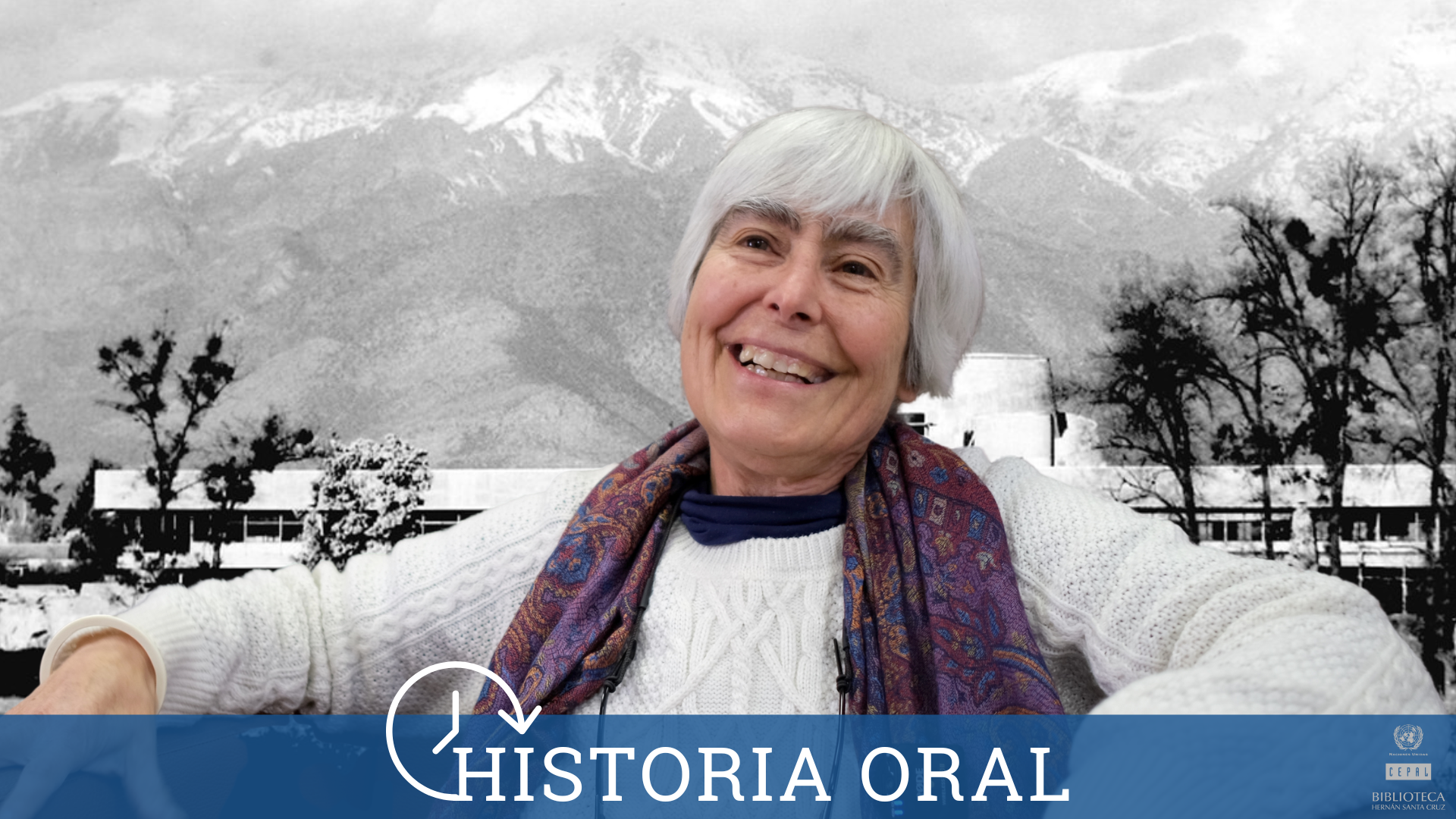
In this Historia Oral de la CEPAL interview, Martine Dirven, former Head of the Agricultural Development Unit and later Chief of the Division of Productive and Business Development at ECLAC, revisits more than two decades of service dedicated to rural development and regional cooperation. Drawing on her experience from 1988 to 2009, she reflects on how informal meetings and everyday encounters once nurtured innovation and connection among staff, creating spaces where young professionals could share ideas and build ECLAC’s collaborative spirit.
From New York to Santiago: a journey guided by chance and conviction
Before arriving in Chile, Martine had worked for seven years in the United Nations Department of Technical Co-operation for Development in New York. What brought her to Santiago was, in her own words, “a twist of fate.”
“I wanted to return to Europe — but someone in New York said, ‘There’s an opening in Santiago; why don’t you apply there?’ I never imagined I’d come. Two weeks later, they told me I was approved.”
Her arrival during the final years of Chile’s dictatorship was, she recalls, both strange and inspiring:
“When the plane landed, I felt like I was coming home. It was a peculiar feeling of belonging to a place I didn’t know yet.”
Building a Unit, fostering conversation
When the CEPAL/FAO (Food and Agricultural Organization) Joint Division split, Martine helped steer what became the Agricultural Development Unit with smaller teams and fewer resources, but a sharpened sense of mission.
“We fell from twelve professionals to five. And with FAO carrying out the consultancy and travel budgets, we had to relearn how to ask, and why. You don’t cover the same ground with twelve as with five.”
It wasn’t just structure; it was culture. Martine replaced formal weekly meetings with a daily morning coffee, believing informal, regular dialogue made work better.
“When I became head of the Agricultural Unit, I replaced our weekly formal meeting with a morning coffee. It was more natural. We talked about films, work, life… and somehow ideas flowed better.”
A Cafeteria, a Staircase, and the Art of Running into Ideas
If ECLAC has a geography of memory, Martine maps it around the old cafeteria upstairs. A crossroads where conversations braided disciplines, generations, and the unexpected.
“That cafeteria was a place to meet everyone. If there was no space, you’d ask, ‘May I sit here?’ and you’d end up talking to whoever was there. It was transversal, enriching. We learned each other’s work by sharing a table.”
After the 2010 earthquake, the cafeteria moved. For Martine, the loss of that central meeting place still echoes.
“It was a mistake to move it. We lost a common site of encounter and with it, spontaneous collaboration.”
The Thursdays: Giving Young Voices the Room
Emerging from youthful energy and a desire to be heard, the Thursday sessions became a sanctioned space for early-career professionals to present, debate, and connect.
“It was a revolution of the young. We needed to be listened to. On Thursdays we ended work early, gathered, presented draft papers, and heard colleagues’ feedback. It was an institutional space, and it made us better.”
A Message for the next generation
When asked what advice she would give to young professionals, Dirven smiles and quotes a former colleague Jorge Katz:
“Someone once asked him if, after such a long career, he had learned anything new at ECLAC. Jorge said yes — that what he found most enriching was talking with people from different areas and not being boxed into his specialization.”
For Dirven, ECLAC was more than a workplace, it was a community of thought and solidarity that grew with Latin America through its transformations. Her story reminds us that institutional memory is built not only through documents and reports, but through the people who live its mission day after day.
“That,” she adds, “is one of ECLAC’s greatest strengths. You can truly get to know your colleagues, exchange ideas, and grow beyond your own discipline.”