Sixth Regional Water Dialogues: Latin America and the Caribbean move from strategic vision to implementation
Work area(s)

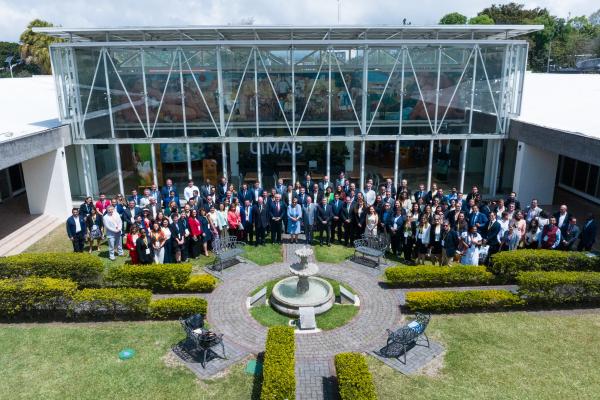
Punta Cana, Dominican Republic, May 28, 2026 – The Sixth Regional Water Dialogues concluded with progress toward the implementation of water security measures for Latin America and the Caribbean. The meeting, organized by the Economic Commission for Latin America and the Caribbean (ECLAC) and the National Institute of Hydraulic Resources of the Dominican Republic (INDRHI) , took place over two days in Punta Cana, from May 27 to 28, 2026, with the participation of government representatives from more than 15 countries—including the Dominican Republic, Brazil, Chile, Colombia, Costa Rica, El Salvador, Guatemala, Panama, and Peru, among others—as well as international organizations, technical institutions, representatives of civil society, academia, and the private sector. This diverse range of actors enriched the regional dialogue by incorporating various institutional, territorial, and sectoral perspectives. Participation among national and international guests was 46% women and 54% men.
The main objective of the event was to move from the voluntary commitments assumed in 2023 with the Regional Action Agenda for Water in Latin America and the Caribbean , towards implementation, strengthening a shared regional vision on water as a super-connector of sustainable development (ECLAC) : a perspective that recognizes that water management cannot be addressed solely as a sectoral issue, but as a structural condition for health, food security, energy, biodiversity, fiscal sustainability, adaptation to climate change and regional cooperation.
Inaugural session
The inaugural session on May 27th featured prominent participation from high-level authorities from the host country and ECLAC. The opening remarks included speeches by Mr. Davis Aracena , Vice Minister of Soils and Water of the Ministry of Environment and Natural Resources of the Dominican Republic; Mr. Olmedo Caba Romano , Executive Director of INDRHI; and Ms. Ángela Penagos , ECLAC Director in Colombia and head of the Water and Biodiversity Unit.
In his speech, Mr. Davis Aracena He emphasized the urgent need to address the growing pressure on water resources—droughts, watershed degradation, pollution, and increasing urban, energy, agricultural, and tourism demands—as a constraint requiring integrated and coordinated policy responses. He underscored the Dominican government's commitment, under the leadership of President Luis Abinader Corona, to water management that goes beyond planning and translates into measurable results.
Mr. Olmedo Caba Romano , as co-host of the meeting, welcomed the authorities and representatives of the countries and institutions present. He emphasized the importance of placing water at the center of the region's development and well-being, especially in the Caribbean. He also pointed out the challenges facing this resource, such as its scarcity, associated infrastructure, and climate change—factors that directly affect the region's water security. The challenge, therefore, is not more investment, but rather concrete ideas and actions that promote positive results for the population. He stressed that collaboration among countries and international cooperation through the United Nations will allow for a stronger and more coordinated agenda. He emphasized that the Dominican Republic's commitment is to close the gap between planning and implementation to promote water as a central driver of productive sectors, as well as to promote water security in the country and the region.
Ms. Ángela Penagos outlined the paradigm shift being promoted by ECLAC: "Water can no longer be understood solely as a sectoral resource. Water is an economic, social, environmental, and territorial asset—multifunctional and finite." Ms. Penagos called for treating water as a super-connector of development—linking productivity, equity, climate resilience, fiscal sustainability, and biodiversity—and urged the region to present itself at the UN Water Conference "with a clear voice that recognizes the human right to water, defends the protection of ecosystems, and promotes regional cooperation."
Subsequently, the process began Presentations on national and regional positioning , in which Mr. Olmedo Caba Romano participated. Mr. Martín Francos Rodríguez , Executive Director of INDRHI and Vice Minister of Planning and Public Investment of the Ministry of Finance and Economy of the Dominican Republic, participated. Representing ECLAC were Mr. Jorge Mario Martínez Piva , Director of ECLAC's Subregional Headquarters in Mexico and Central America; and Ms. Silvia Saravia Matus , ECLAC Economic Affairs Officer in charge of water issues.
Mr. Olmedo Caba Romano The Dominican Republic's experience was presented as a concrete model of institutional coordination. Through the Water Cabinet and the 2021–2036 Water Pact —approved in August 2023 with an investment plan of USD 8.565 billion—the Dominican Republic has mobilized more than 100 billion Dominican pesos for water infrastructure, sanitation, irrigation, and environmental monitoring since 2020. Progress was also presented on updating the National Hydrological Plan to 2045 as the backbone of a long-term national vision. The central message concluded: “The Dominican experience is a model to follow in the region and empowers water as a strategic pillar of development.”
For his part, Mr. Martín Francos Rodríguez The Dominican government presented the Catalog of Alternative Financing Mechanisms for the Water Sector , a technical tool developed to translate its water strategy into real investment. The catalog identifies 23 prioritized instruments grouped into four functional categories: incentive alignment, risk reduction, advanced financial structuring, and thematic financing. Mr. Francos Rodríguez noted that the water and sanitation sector has the second-highest absorption capacity in the country, with 19 applicable instruments, second only to the agribusiness sector. Among the highlighted instruments are blue and green bonds, sustainability-linked loans, debt-for-nature swaps, parametric disaster insurance, and blended finance vehicles. He concluded by stating, "We have the demand and the impact; the challenge is to modernize governance to structure the capital."
Mr. Jorge Mario Martínez Piva elevated the debate to the level of development economics. He pointed out that Latin America and the Caribbean are burdened by three structural traps—low growth, high inequality, and poor governance—and that water allows us to see all three developing simultaneously. His argument was compelling: water is not just another sector, but a structural constraint on development that impacts productivity, social cohesion, and governance. He concluded that "Water is a privileged entry point for demonstrating how a well-designed policy can transform structural constraints into levers for sustainable development."
Ms. Silvia Saravia Matus, in her presentation “Water as a Structural Constraint and Superdriver of Sustainable Development,” highlighted the urgency: 2.5 out of every 10 people in the region lack access to safe drinking water, 5 out of 10 lack managed sanitation, and 43% of water bodies are in poor environmental condition. In cities like Lima, Bogotá, and Santiago, the crisis is already reshaping urban and productive water security. The region spends a mere 0.3% of its GDP on water, executes only 72% of its budgeted resources, and at the current rate will not reach 81% of the SDG 6 targets by 2030. “The gap is not only financial. It is also an implementation gap,” she warned. Her proposal was concrete: to value water—not to privatize it, but to send the right economic signals, protect the most vulnerable, and make systems sustainable—through progressive tariffs, targeted social mechanisms, and usage charges.
Day 1: Strategic narrative and political alignment
The first day was focused on building a strategic narrative and promoting regional political alignment, with a view to the 2026 United Nations Water Conference.
Interministerial Roundtable "Realigning Sectoral Policies from a Water Perspective"
Following the opening ceremony and presentations on national and regional positioning, the high-level interministerial and intersectoral roundtable "Realigning Sectoral Policies from a Water Perspective" was held , moderated by Ms. Angela Penagos (ECLAC). Panelists included: Mr. Davis Aracena (Vice Minister of Soils and Water, Ministry of Environment, Dominican Republic), Ms. Ruth Quevedo (Vice Minister of Water, Ministry of Housing, Colombia), Mr. José Miguel Zeledón (Director of Water, Ministry of Environment and Energy, Costa Rica), Ms. Cristiane Battistone (Director of the National Water Agency – ANA, Brazil), Ms. Ethel Cabrera (President of the Salvadoran Water Authority, El Salvador), and Mr. Jaime Carrera (Vice Minister of Water, Ministry of Environment, Guatemala).
The dialogue at this roundtable allowed for reflection on how sectoral policies should adapt to an integrated vision of water, considering its relationship with productive competitiveness, fiscal sustainability, territorial and social equity, climate resilience, and ecosystem protection. The need to move toward greater coherence among public policies, management tools, and national priorities was emphasized, as well as the need to develop shared regional messages that position water as a strategic pillar of sustainable development in multilateral forums.
Presentation of regional products from ROSA (Network and Observatory for Water Sustainability): Regional Hydrological Profile, Digital Repository and Online Course
During the afternoon of the first day, ECLAC presented regional products linked to the ROSA Project (Network and Observatory for Water Sustainability). Ms. Silvia Saravia Matus presented the Regional and National Water Profile Database hosted on CEPALSTAT ; the ROSA repository of regional experiences related to water policies with a gender perspective; and the Online Course on Evidence-Based Water Policies . (See attached presentation: ROSA Project. Regional Water Assets).
The afternoon session of the first day was dedicated to the launch of the online course "Evidence-Based Water Policies" (starting June 1, 2026). The course is structured in four modules: water and agriculture; water and the circular economy; water and biodiversity; and water valuation and governance. It was emphasized that this first edition will prioritize the participation of women in the water sector from the ROSA countries (Bolivia, El Salvador, Panama, and the Dominican Republic).
The objective of this space was to connect the essence of the course modules with public policy challenges through the active participation and discussion of the attendees in the form of four “technical dialogue tables”:
1. Water and Agriculture Roundtable: Moderator: Melvin Medina, FAO; Second Moderator: René Salgado, ECLAC; Rapporteur: Naja Vargas. Country Interventions: Juan Saldaña, Dominican Republic; Marcela Andino, Argentina; Ibélice Añino, Panama. Commentators from the Water Resources Expert Group: Gina Rosario Díaz, Coordinator, IICA; Tania Santos, SEI Latin America; and Diana Rojas, SDC.
The panel identified that agriculture accounts for approximately 70% of water withdrawals in Latin America and the Caribbean, with productivity levels per cubic meter substantially lower than those of regions with similar water endowments, which shows a significant margin for improvement in efficiency.
It was discussed that incorporating the value of water into agricultural production decisions does not imply privatization, but rather the design of economic signals that incentivize efficient use, the adoption of precision irrigation technologies, and the reduction of losses in distribution systems. Climate resilience in agriculture requires a combination of technological solutions—such as drip irrigation, soil moisture sensors, and early climate information systems—with nature-based solutions, including soil conservation, agrobiodiversity, and rainwater harvesting. Furthermore, it was established that water security and food security are intrinsically linked; therefore, water policies must be closely coordinated with agricultural policies, avoiding subsidies that promote water-intensive crops in water-stressed areas.
Finally, it was emphasized that water information and monitoring systems at the basin level constitute an enabling condition for sustainable agriculture, and that progress is needed towards participatory governance schemes in irrigation districts that involve farmers in management, infrastructure maintenance and the definition of allocation rules.
2. Water and Circular Economy Roundtable: Moderator: Diego Fernández, EconTec ; Second moderator: Alfredo Montañez, ECLAC; and Rapporteur: Pedro Chavarro, Econtec . Country Interventions: Carlos Flores, El Salvador; Ruth Quevedo, Colombia. Commentators from the Water Resources Expert Group: Virginia Barbancho, CODIA, and Miguel Gutierrez, World Vision.
The panel emphasized that the water sector has the capacity to move from a perception as a fiscal cost to a position of value generation, through the recovery of resources contained in wastewater: energy through biogas from sludge, nutrients such as phosphorus and nitrogen for fertilizers, biosolids as soil conditioners, and treated water for non-potable uses.
It was identified that implementing circular economy principles in treatment plants can reduce operating costs by up to 30% and generate new revenue streams. However, it was determined that the main obstacle is not technological—given that recovery technologies are available and mature—but rather related to regulatory frameworks and business models, since in most countries of the region, regulations do not allow the commercialization of biosolids or the injection of biogas into energy networks on a small scale.
It was acknowledged that green financing and thematic bonds offer growing opportunities for circular economy projects in water, provided that environmental additionality is demonstrated and recognized certifications are obtained. It was also noted that scale is a critical factor: resource recovery is more economically viable in medium- to large-sized plants, while small or decentralized systems require collaborative schemes or less technologically complex solutions. Finally, the need for a cultural shift among regulators, operators, and the public was emphasized, enabling them to recognize treated water as a resource rather than waste, accompanied by communication campaigns and capacity-building processes.
3. Water and Biodiversity Roundtable: Moderator: Sebastian Izquierdo, OAS; Second moderator: Santiago Granados, ECLAC; and Rapporteur: Naja Vargas, ECLAC. Country interventions: Pedro Pablo Silva, Chile; Javier Viscarra Valdivia, Plurinational State of Bolivia; Jorge Urbina, Trifinio Plan Trinational Commission. Commentators from the Water Resources Expert Group: Felipe Rivera, Humboldt Institute, and Franklin Molina, (CAN).
The panel highlighted that the degradation of aquatic and watershed ecosystems generates significant macroeconomic risks that are not yet adequately reflected in public and private investment decisions. It was determined that integrating nature-based solutions into water policies is a cost-effective strategy for strengthening climate resilience, improving water regulation, and protecting biodiversity.
Among the solutions identified are wetland restoration, riparian forest conservation , artificial aquifer recharge, and the rehabilitation of páramo ecosystems. It was recognized that payment mechanisms for water-related ecosystem services have proven effective in various contexts across the region, provided they involve paying users—such as water utilities, hydroelectric plants, and irrigation systems—in financing upper watershed conservation.
Furthermore, it was identified that the absence of economic valuation of ecosystem services in national balances and pre-investment studies leads to a systematic underestimation of the benefits of conservation and an overestimation of the benefits of projects that degrade ecosystems.
The panel recommended moving towards incorporating natural capital metrics into national accounting systems and infrastructure project eligibility criteria, as well as strengthening partnerships between public, private and community actors for integrated watershed management.
4. Water Valuation and Governance Module : Moderation: Michael Hantke, ECLAC; Second moderation: Elizabeth Coble, ECLAC; and rapporteur: Santiago Granados, ECLAC. Country interventions: Ms. Ruth Quevedo, CRA, Colombia; Gloria Narváez, CRA, Colombia; José Miguel Zeledón, Costa Rica; Cristiane Collet Battiston, Brazil; and Ethel Cabrera, El Salvador. Commentators from the Water Resources Expert Group: Fabiola Tábora, GWP; Mauro Gutiérrez, SUNASS; and Mariella Sánchez, AQUAFONDO.
The panel emphasized that recognizing the strategic value of water—in its economic, social, environmental, and territorial dimensions—does not imply its privatization, but rather the design of instruments that send the right economic signals to encourage efficient use, protect the most vulnerable, and guarantee the financial sustainability of services.
It was determined that tariff systems should combine progressive tariffs that reflect the real costs of providing the service with targeted subsidies for lower-income households, avoiding both generalized subsidies that distort scarcity signals and the exclusion of populations living in poverty.
It was recognized that the financial sustainability of the water sector requires charging usage fees to large consumers —industry, irrigated agriculture, hydroelectric generation, tourism—, whose resources can be allocated to basin conservation, expanding coverage and improving infrastructure.
Regarding governance, it was concluded that regulatory reforms are needed to strengthen river basin institutions as multi-stakeholder and multi-level coordination spaces, linking national, regional, and local levels, and guaranteeing citizen participation, transparency in decision-making, and access to information. Finally, it was emphasized that valuing water and effective governance are enabling conditions for mobilizing investment, reducing socio-environmental conflicts, and advancing water security as a pillar of sustainable development.
Day 2: From discourse to action – Water finance workshop
The second day began with a recap of the main messages from the previous day. This session allowed for the consolidation of the strategic narrative built during the first day and established a conceptual bridge to the technical work on water financing.
Training in Water Financing
The opening presentation, delivered by Mr. Francisco Villarreal (Economic Affairs Officer of the Economic Development Division of ECLAC), highlighted that Latin America and the Caribbean face serious limitations in achieving the Sustainable Development Goals (SDGs) set for 2030. Using SDG 6 (Clean Water and Sanitation) as a prime example, the presentation emphasized that a massive and ever-increasing global financing gap, which has worsened significantly since 2020, is hindering the region's progress. To combat this situation, the presentation outlined the core priorities of the FfD4 agenda, which include addressing the current debt crisis, reforming the international financial architecture, and effectively catalyzing investments in sustainable development.
The presentation illustrated how national investment platforms serve to operationalize these financial strategies on the ground. These platforms act as the vehicle that connects high-level commitments, such as National Development Strategies and Climate Goals (NDCs), directly with tangible implementation sectors. Ultimately, Villarreal concluded that organizing these resources around infrastructure, climate change, social development, and productive capacity represents the most effective path for the region's future.
ECLAC Financing Framework for Water Security
Next, the ECLAC Water team addressed the profound structural gap between water investment and the actual implementation of projects in the region. They explained that the central problem lies not only in the lack of resources, but also in the inadequate preparation of technically sound and financially structured projects that would allow them to absorb the capital available in the new global financial architecture.
Water Security Financing Framework was presented , which is divided into two main phases structured around five essential dimensions. Phase 1 (Design and Justification) encompasses the Strategic Dimension, which assesses the alignment of proposals with public policies, and the Economic Dimension, aimed at measuring the social value and net welfare of the investment. Phase 2 (Implementation Arrangements) covers the Commercial Dimension (operating models and contracts), the Financial Dimension (funding sources such as tariffs, taxes, and transfers), and the Management Dimension (institutional capacity and governance).
Throughout the exhibition, various emerging opportunities based on sustainable finance were presented, such as climate integration and blended finance . finance ) and thematic bonds (green, social, sustainable, and blue). In addition to theorizing about the structuring of Public-Private Partnership (PPP) contracts and the management of operational and demand risks, strong emphasis was placed on the need to design sustainable cost methodologies and tariff collection structures that guarantee the long-term maintenance of systems without leaving vulnerable users unprotected.
Finally, the training illustrated these concepts through several practical case studies and successful international experiences. A program to convert 56 wastewater treatment plants (WWTPs) in Colombia, focused on the circular economy by harnessing methane to generate energy, was highlighted, as well as the specific case of the San Fernando WWTP in Itagüí (Medellín) . Additionally, international projects were presented, such as the Metapán WWTP and a debt-for-nature swap in the Lempa River basin in El Salvador , the Aquapolo WWTP in Brazil , a carbon-linked bond program in Vietnam , the National Water Reuse Program in South Africa , and the Surat Climate Change Trust in India .
Regional experiences:
The third and final session of the workshop was dedicated to regional experiences in water financing in Latin America and the Caribbean. This session, moderated by Ms. Silvia Saravia Matus (ECLAC), provided an opportunity to learn about concrete initiatives already mobilizing resources for water security and demonstrated that the financing gap can be addressed through a combination of institutional innovation, international cooperation, capacity building, and new financial instruments. The session included the following presentations:
From the FAO, Mr. Melvin Medina presented the ADAPTA-R and ADAPT Jamaica programs, funded by the Green Climate Fund and the CABEI, which combine ecosystem-based adaptation, capacity building, and access to financing to increase water resilience in vulnerable communities. The experience demonstrated how water security can become a gateway to climate action and territorial development.
The Organization of American States (OAS), through Ms. Delfina Iervolino and Mr. Sebastián Izquierdo, presented two complementary experiences. The first addressed the Works for Taxes mechanism, which has mobilized more than one billion dollars in Colombia, allowing companies to finance water, sanitation, environmental restoration, and climate adaptation projects through tax incentives. The second highlighted cooperation in the Plata Basin as an example of how cross-border governance can facilitate the mobilization of international resources and the implementation of shared investment programs.
Ms. Cristiane Battiston, Director of Brazil's National Water and Basic Sanitation Agency (ANA), presented the São Francisco River Integration Project, the country's largest water infrastructure, currently transitioning to a public-private partnership scheme that links financing, operational performance and long-term sustainability.
For her part, Ms. Ethel Cabrera, President of the Salvadoran Water Authority (ASA), shared El Salvador's experience with the debt-for-nature swap implemented for the conservation of the Lempa River basin. This operation, considered a global pioneer in freshwater management, will mobilize hundreds of millions of dollars toward water security initiatives, environmental restoration, and institutional strengthening.
Mr. Miguel Gutiérrez, from World Vision, presented the Aqua Nexus initiative, which aims to transform traditional water, sanitation, and hygiene interventions into sustainable and financially structured investment portfolios. Similarly, Ms. Maren Barbee presented the FIDEAGUA model from Azure Source Capital and Catholic Relief. Services (CRS), which combines technical assistance, guarantee funds and financing to strengthen local water operators in Central America, already benefiting hundreds of thousands of people.
From Peru, Ms. Mariella Sánchez, executive director of Aquafondo , demonstrated how water funds can aggregate multiple local projects to achieve sufficient scale and access climate finance and private investment. This experience has enabled the mobilization of resources for watershed restoration, natural infrastructure, and urban water security.
Ms. Fabiola Tábora, Executive Secretary of GWP Central America, presented El Salvador's Hydroclimate Investment Program and the progress of the High-Level Panel for Investment in Water and Climate Resilience, promoted together with ECLAC and CAF, an initiative that seeks to mobilize up to USD 20 billion to accelerate the achievement of SDG 6 in the region.
Ms. Virginia Barbancho, from the Permanent Technical Secretariat of CODIA, announced the creation of a working group specializing in financing for the integrated management of water resources in Ibero-America, developed jointly with ECLAC, with the objective of strengthening capacities, exchange of experiences and regional cooperation.
Finally, the session also included messages from strategic partners in regional water financing. Mr. Franz Rojas, Director of Water Security and Solid Waste at CAF, emphasized that water security is a strategic asset for development and presented the institution's progress in financing and supporting project preparation. For his part, Mr. David Michaud, Regional Manager of the Water Sector at the World Bank for Latin America and the Caribbean, presented the global Water Forward initiative, based on four pillars: mobilizing new sources of financing, strengthening institutions and regulations, adopting national water pacts, and creating multi-stakeholder platforms to accelerate universal access to water security by 2030.
Taken together, the experiences showed that the region has a growing diversity of instruments—from climate finance and debt swaps to water funds, public-private partnerships, blended finance and cross-border cooperation—that can help close the water investment gap when combined with strong institutions, good governance and a long-term strategic vision.
Update of the Regional Action Agenda for Water in Latin America and the Caribbean
During the afternoon, the event featured a participatory closing session focused on the strategic consolidation of the proposal embodied in the Regional Water Action Agenda . This session allowed for the organization of lessons learned from both days, the reinforcement of shared messages, and the projection of potential regional lines of work.
As a result of the process, participants made progress in a collective exercise to update the Regional Water Action Agenda for Latin America and the Caribbean , aimed at moving from voluntary commitment to implementation. This update proposes a more selective, operational, and strategic agenda, centered on three priority areas: democratic governance, water valuation, and sustainable financing, all supported by evidence for decision-making.
“Within the framework of the event, the participants agreed on the need to place the concept of water as a super driver of development at the center of the Regional Water Action Agenda, as a guiding principle that articulates governance, multidimensional valuation and sustainable financing, thus allowing water management to promote in a cross-cutting manner productivity, equity, climate resilience and territorial cooperation.”
Based on the diversity of national realities, institutional frameworks, territories, water cultures, and management models in the region, this agenda proposes moving toward a shared vision of water as a strategic super-connector of sustainable development. This vision recognizes water security as a prerequisite for life, health, productivity, food security, climate resilience, territorial cohesion, and peace. Explicitly incorporating the notion of water as a development super-driver into the planning and monitoring instruments of the regional agenda will enable concrete intersectoral actions, where water acts as a catalyst for investment, public policy, and regional cooperation.
The conclusion emphasized the importance of moving from voluntary commitments to implementation, strengthening democratic governance, the multidimensional valuation of water, sustainable financing, and evidence-based regional cooperation. Under the paradigm of water as a superdriver of development, these pillars reinforce each other: democratic governance ensures equity, multidimensional valuation internalizes the invisible benefits of water, and sustainable financing channels resources toward projects that multiply their impact on health, food security, energy, and climate. To achieve this, it will be essential to promote the exchange of experiences, respect national sovereignty, mobilize viable investment portfolios, and guide collective action toward concrete results for people, ecosystems, and economies.
Closing of the Event
The closing ceremony of this regional event was led by Mr. Olmedo Caba Romano (INDRHI) and Ms. Ángela Penagos (ECLAC) . Mr. Caba Romano stated: "The Dominican Republic is proud to have hosted this meeting... The Dominican Water Pact, led by President Luis Abinader Corona and managed through the Water Cabinet, is an example of how political will can translate into concrete investments."
For her part, Ms. Ángela Penagos concluded: "Looking ahead to the 2026 UN Water Conference, Latin America and the Caribbean have a key opportunity to present a unified regional voice... What we need is to accelerate the transition from commitments to action."
The closing of the Sixth Regional Water Dialogues highlighted the importance of continuing to strengthen regional cooperation, technical assistance, and the development of a common agenda that recognizes water as a central pillar of sustainable development. Looking ahead to the 2026 United Nations Water Conference, Latin America and the Caribbean have a key opportunity to present a unified regional voice, focused on accelerating solutions that improve people's lives, protect ecosystems, and strengthen the resilience of their territories.
Related content

6th Regional Water Dialogues 2026: Positioning Water Resources as a Strategic Asset for Sustainable Development
The meeting will take place on may 27 and 28 in the Dominican Republic, in an in-person format, and will seek to define a regional roadmap towards the...

América Latina y el Caribe propone abordar el agua como activo estratégico del desarrollo en la inauguración de los VI Diálogos Regionales del Agua
CEPAL, INDRHI y el Sistema de las Naciones Unidas en República Dominicana instaron a la región a pasar de los compromisos a la acción y la implementac...

Fifth Regional Water Dialogues: Latin America and the Caribbean strengthen cooperation and action for water sustainability
The fifth edition of the Regional Water Dialogues brought together authorities, experts and international organizations within the framework of the 20...
Accelerating Sustainable Water Management in Latin America and the Caribbean: Highlights from the IV Regional Water Dialogues
The IV Edition of the Regional Water Dialogues for Latin America and the Caribbean (LAC) was held from March 11 to 13, 2024, organized by ECLAC in col...
Third Edition of the Regional Water Dialogues in Latin America and the Caribbean Will Take Place at ECLAC
This high-level ministerial event will be held on February 1-3 and is part of the regional preparatory process for the UN 2023 Water Conference, which...
Country(ies)
-
 Dominican Republic
- Latin America and the Caribbean
