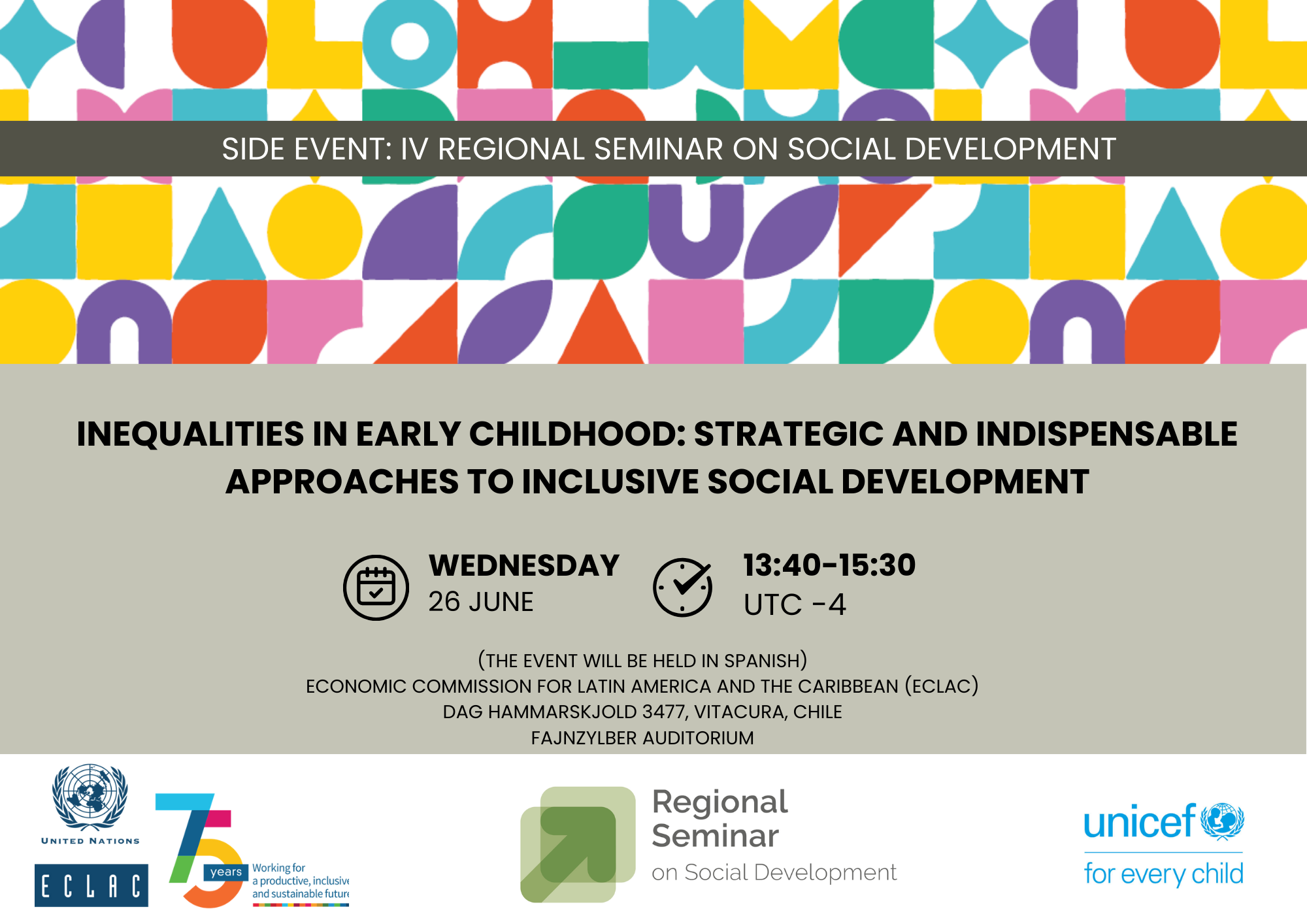
Children in their early years are no strangers to the impact of the low-growth trap and high levels of poverty and inequality that characterize Latin America and the Caribbean. When adding the effects of the COVID-19 pandemic to the above, multiple aspects of the well-being of the new generations were impacted. Unless decisive and transformative measures are taken, there will be lasting consequences that will affect their life trajectories.
The first years in children’s life are essential for their cognitive, social, physical, and emotional development, and the quality of their early experiences is critical to laying a solid foundation for their future and that of society. Reaching their full potential, a human right, involves receiving healthcare, protection, and learning opportunities, making investment in this period crucial. Such investment has significant long-term impacts, including improving future health and learning indicators, the effectiveness of educational systems, career trajectories, and economic development, as well as helping to reduce inequalities that arise throughout life (ECLAC, 2022)[1].
This scenario has prompted a collaborative response between ECLAC and UNICEF, culminating in the creation of the document “Confronting Inequality in Early Childhood: The Footprints of the COVID-19 Pandemic on New Generations of Children in Latin America and the Caribbean”. The document is the result of an analysis based on qualitative and quantitative data and addresses the emerging and persistent challenges faced by new generations, with a special focus on maternal and child health and early childhood education.
The event will bring together authorities, experts, civil society representatives, and international organizations to discuss the report's findings and explore effective agendas and policies that mitigate the impacts of the pandemic and promote comprehensive early childhood development.
[1] Economic Commission for Latin America and the Caribbean (ECLAC), Social Panorama of Latin America, 2022 (LC/PUB.2012/). Santiago, 2022.