ECLAC and OECS sign MoU to advance digital policy harmonisation across the Eastern Caribbean
Work area(s)
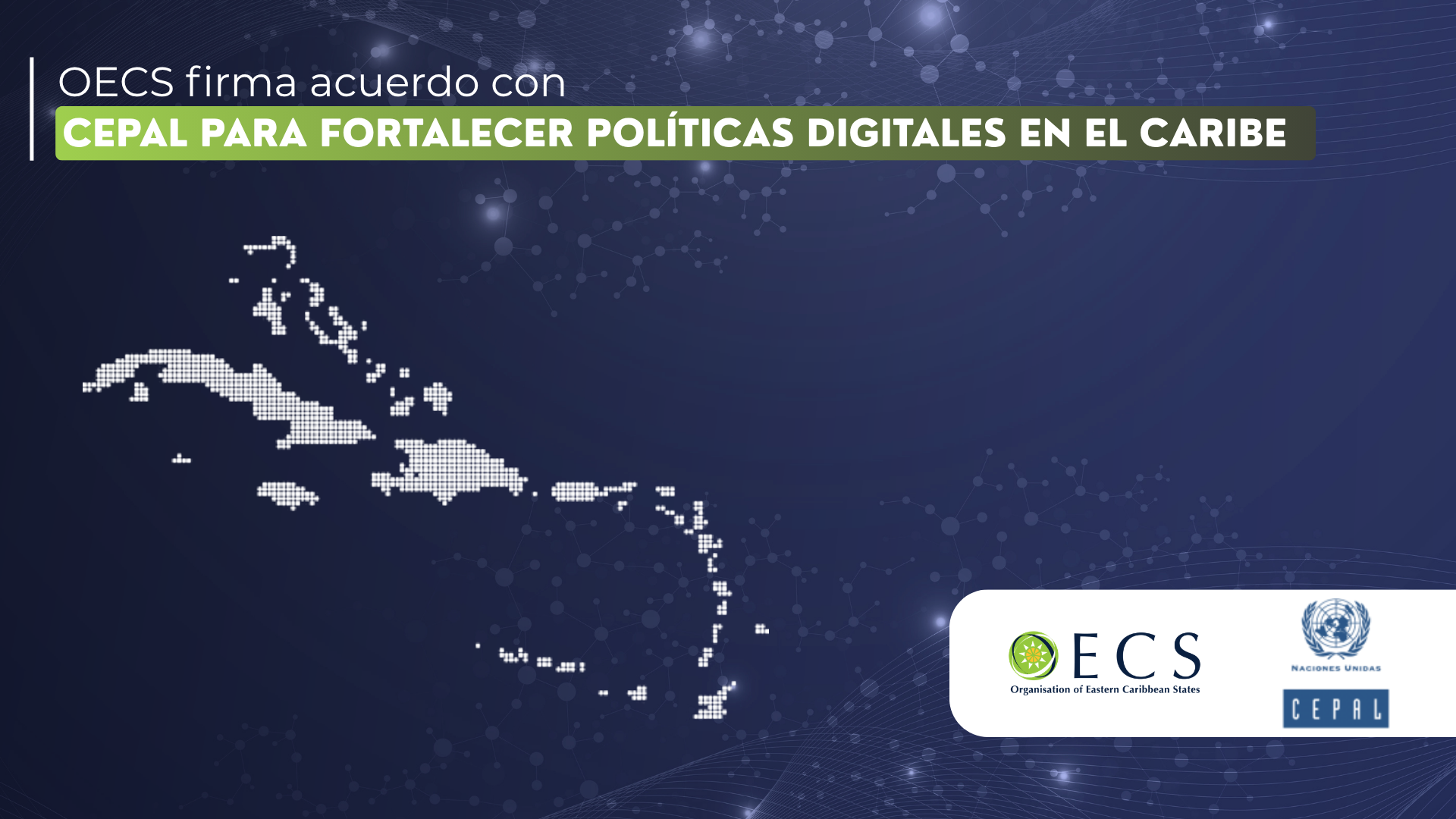
Digital transformation in the Eastern Caribbean has taken a significant step forward with the signing of a Memorandum of Understanding (MoU) between the Economic Commission for Latin America and the Caribbean (ECLAC) and the Organisation of Eastern Caribbean States (OECS). The agreement will support the development of a Digital Policy Harmonisation Agenda for the organisation's member states.
The Memorandum of Understanding was signed by ECLAC Executive Secretary José Manuel Salazar-Xirinachs and OECS Director General Didacus Jules. It aims to establish a more coherent regulatory framework that will foster the digital economy and deepen cooperation among Eastern Caribbean states.
As part of the partnership, ECLAC will lead the technical design of the Digital Transformation Action Plan for OECS member states, providing the project's methodology, technical coordination and quality assurance.
The first phase of implementation will run over the next six months and will be carried out in two stages.
During the first three months, the project will assess existing legal and regulatory frameworks across OECS member states, identifying legal gaps, regulatory inconsistencies and cross-border vulnerabil ties that may hinder regional digital integration.
The following three months will focus on developing a reform roadmap alongside a Digital Trust Framework built around four interrelated pillars:
- Cybersecurity
- Data protection
- Digital identity governance
- Digital payments regulation
As part of the initiative, the partners will also develop a Digital Trust Maturity Index, enabling countries to benchmark their institutional capabilities, assess risks associated with digital services and evaluate the legal readiness of key digital initiatives.
Delivering this agenda will require strong partnerships among governments, international organisations and other strategic stakeholders. In that process, ECLAC will play a central role as technical secretariat, drawing on its regional expertise in digital transformation and public policy.
