Adapting to Climate Change is an Imperative and an Opportunity for Latin America and the Caribbean, States New Report Presented by ECLAC at COP31
Work area(s)
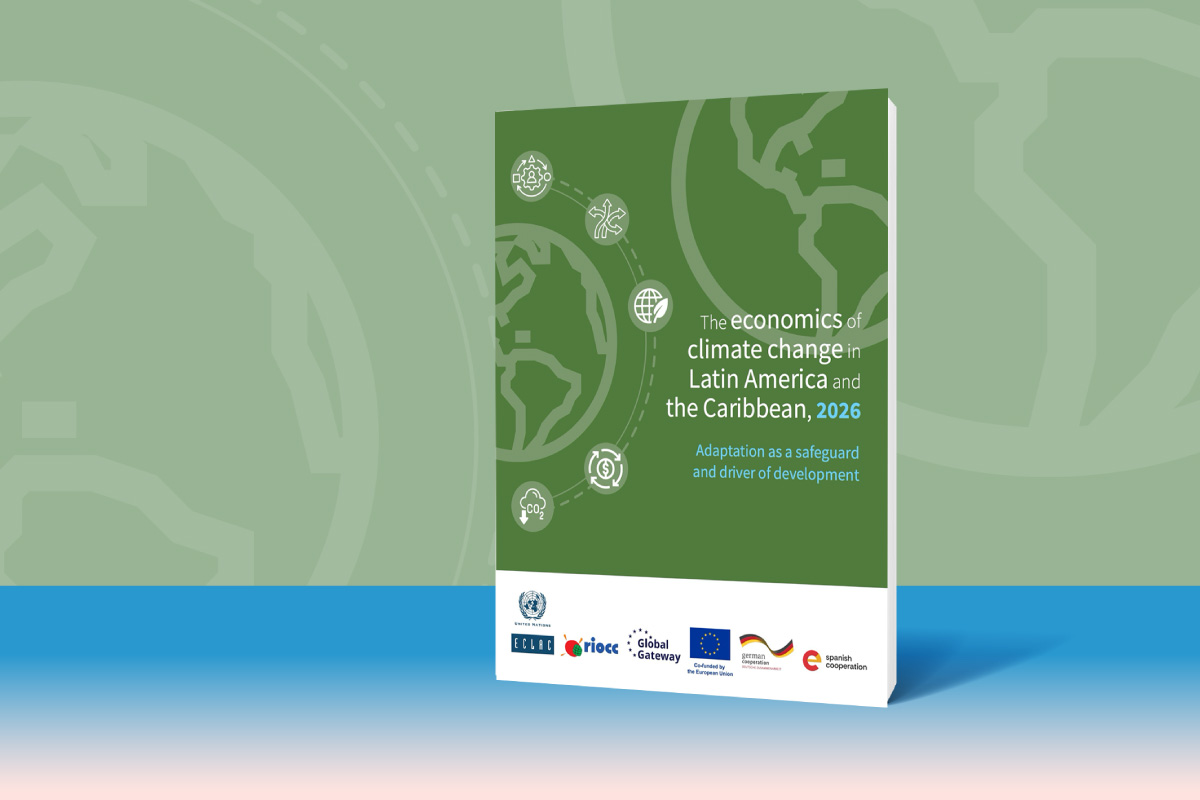
Adapting to climate change must be understood not only as a response to emergencies or environmental damage but rather as a strategic economic decision to protect development progress, strengthen productivity, and leverage new economic opportunities, states a new report by the Economic Commission for Latin America and the Caribbean (ECLAC) presented today at the 31st Conference of the Parties of the United Nations Framework Convention on Climate Change (COP31), being held in Antalya, Turkey.
The document The economics of climate change in Latin America and the Caribbean, 2026: adaptation as a safeguard and driver of development, prepared with the support of the Euroclima Programme of the European Union and the Ibero-American Network of Climate Change Offices (RIOCC), warns that if the current trend of climate policy continues, the region’s per capita GDP could drop by 7% by 2050, with estimated losses between 4% and 12%.
It also states that heat stress could cut labor productivity by between 14% and 17%, depending on the level of global warming, affecting the region’s economic and social outlooks.
Added to these risks are the effects of extreme weather phenomena. According to the estimates included in the report, the 2026/2027 El Niño phenomenon could cause cumulative economic losses of nearly 2% of the region’s GDP over a three-year span and push as many as 4.8 million people into poverty by the end of the decade. Its effects on production and food and energy prices could also increase inflationary pressure.
In this context, ECLAC proposes that adaptation must be consolidated as an economic development policy with the capacity to reduce vulnerabilities, protect economic growth, and create investment opportunities, innovation, and employment.
“Adapting to climate change is not only an environmental necessity but also a strategic economic decision. Investing in resilience allows us to protect our infrastructure, our productivity, and our ecosystems, but it also creates opportunities for innovation and employment. The challenge is incorporating adaptation into economic policies and investment decisions to drive more sustainable and inclusive development,” stated Carlos de Miguel, Director of the Sustainable Development and Human Settlements Division of ECLAC.
Adaptation as a strategic investment in development
The publication emphasizes that adaptation can contribute not only to reducing the losses and damages associated with climate change but also to overcoming structural challenges that limit productivity and economic development in Latin America and the Caribbean.
To take advantage of these opportunities, ECLAC proposes incorporating climate risks in macroeconomic planning, public budgets, and investment decisions. It likewise recommends recognizing the economic value of losses avoided through investments in resilience and strengthening institutional capacities to foresee risks, assess alternatives, and carry out projects that yield lasting results.
However, financing continues to be one of the main challenges. According to data included in the report, climate finance flows in Latin America and the Caribbean doubled between 2020 and 2024, reaching 108 billion dollars. Despite this progress, only 12% of resources were allocated to adaptation and resilience, while 79% was directed to mitigation and 9% to projects with both goals.
Added to this gap are difficulties in planning and coordination with economic policy. Of the 33 countries in the region, only 18 have estimates of the costs of their adaptation measures included in their most recent nationally determined contributions or national adaptation programmes of action, making it difficult to calculate necessary investments and mobilize resources to meet climate commitments.
The publication also emphasizes that the benefits of certain adaptation investments can exceed their costs and generate positive effects for the economy as a whole, meaning that adaptation investments are justified not only by climate objectives but also by economic ones. Many of these measures can even simultaneously contribute to reducing emissions.
Institutional capacities and cooperation to transform economies
ECLAC stresses that financing is essential but not sufficient. Countries must also strengthen their institutional capacities, improve information on climate risks, and coordinate economic, productive, social, and environmental policies.
The document’s recommendations include promoting nature-based solutions, protecting ecosystems, and driving technological innovation in sectors like agriculture, water management, and infrastructure. It also proposes strengthening social protection and guaranteeing the participation of Indigenous Peoples and communities in adaptation decisions, in line with the Escazú Agreement.
The study also highlights the importance of deepening regional cooperation to extend access to international financing, share knowledge, and develop common methodologies that make it possible to assess risks, allocate investments, and follow up on the results of adaptation policies.
The report was presented by Carlos de Miguel during the event “Adaptation: a strategic opportunity in the Ibero-American region,” organized by ECLAC and the Spanish Climate Change Office (OECC) during COP31. The activity also included the participation of Elena Pita, Director General of the OECC; Adriana Bonilla, Director of Climate Change of Costa Rica; José Luis Samaniego, Undersecretary of Sustainable Development and Circular Economy of Mexico; and Ignacio Lorenzo, Director of Technical Advisory on Biodiversity and Climate of CAF.
With this new report, ECLAC reaffirms that adaptation must be part of a structural transformation strategy that coordinates macroeconomic stability, productive diversification, social inclusion, and environmental sustainability. Moving in this direction will make it possible to protect development achievements, reduce vulnerabilities, and create new economic and social opportunities for Latin America and the Caribbean.
The Spanish version of the publication will be available shortly on the ECLAC website.
Related content
Contact
Public Information Unit
[email protected] , (56 2) 2210 2040