ECLAC: Goods Exports from the Region Will Grow by 20% in 2026, and Modern Services Trade Creates Opportunities to Boost Economic Growth and Productivity
Work area(s)
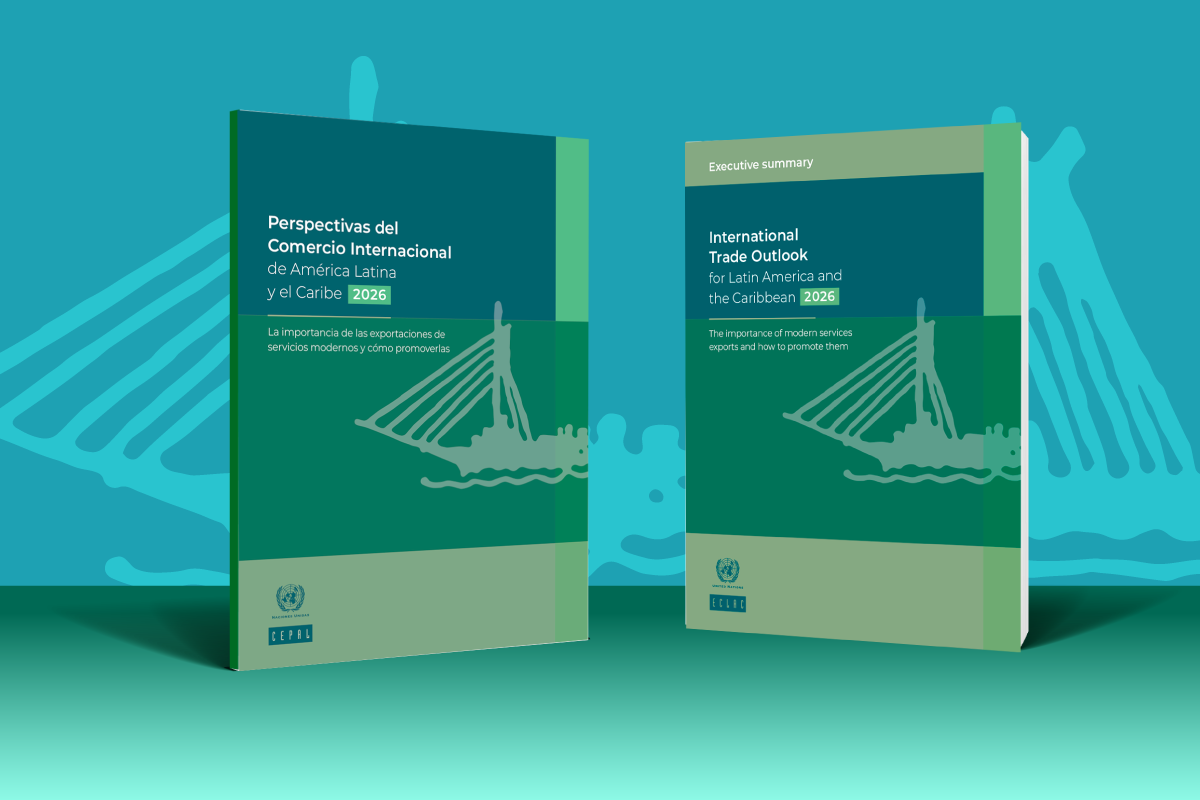
Today the Economic Commission for Latin America and the Caribbean (ECLAC) presented a new edition of its annual report International Trade Outlook for Latin America and the Caribbean 2026: The importance of modern services exports and how to promote them, in which it predicts a significant increase in goods exports for 2026 and highlights the opportunities created by modern services to diversify exports and drive growth and productivity.
The document, presented in a press conference led by the Executive Secretary of ECLAC, José Manuel Salazar-Xirinachs, addresses the deep reconfiguration being experienced by global trade, influenced by goals of economic security, resilience, and sustainability, as well as the weaponization of interdependence, and marked by rapid progress in emerging technologies, the resurgence of productive development policies, and the geographical reorganization of value chains.
The report predicts a 20% increase in the value of goods exports in 2026, the largest since the post-pandemic rebound in 2021. This result is expected to be driven by an 11% rise in export prices and a 9% increase in export volumes, which will grow for the sixth consecutive year. It also advises that performance will be unequal between subregions: South America will benefit from the price cycle of basic goods, while Mexico will show particular growth in manufactured exports.
Services exports are expected to grow by 11%, driven by the recovery of transport and travel, and the resilient growth of modern services. Goods trade increased logistical demands and the demand for international transportation, while tourism benefited travel exports, especially in Central America and the Caribbean.
Regarding regional imports, ECLAC predicts they will grow by 16% in value terms, driven by a 12% expansion in volume and a 4% increase in prices. Import growth points to a recovery in domestic consumption and growing demand for intermediate inputs and capital goods.
Reflecting the favorable outlook for the region as a whole, 28 of its 33 countries are expected to record increases in the value of their goods exports in 2026, with double-digit growth projected in 16 of them.
The second part of the document analyzes the current situation of modern services exports in the region—business, professional, finance, audiovisual, creative, information technology, and research and development services—and the strategic opportunity they represent.
The report states that worldwide services trade, driven mainly by modern and digital services, is showing the strongest growth in international trade. It totaled $9.6 trillion dollars in 2025, with average annual growth of 6.6% over the last decade. In Latin America and the Caribbean, modern services exports grew by more than 3.5 times in the last two decades, compared with about 1.6 times for traditional services. Despite this progress, the region accounts for just 2% of global modern services exports.
These services create opportunities to diversify exports, generate foreign exchange and quality employment, and increase the productivity of other sectors, such as agriculture, mining, and manufacturing. To leverage this potential, a comprehensive strategy is needed that combines promoting exports, attracting direct foreign investment, and developing human talent, effectively coordinated through the public and private sectors. This chapter examines the experiences of several countries in the region, particularly the cases of Costa Rica and Uruguay, which have coordinated these areas through sustained strategies.
“The region faces significant challenges in an uncertain geopolitical landscape. Geopolitical tensions, the disruption of shipping routes, and a lack of predictability in trade policy create trade risks. The competition for critical minerals and new environmental demands are also reconfiguring value chains and conditions for market access,” the Executive Secretary of ECLAC stated.
Daniela García, Chief of the Division of International Trade and Integration, emphasized that the favorable trade situation observed in the region during 2026 creates an opportunity to connect trade, productive development, and investment policies with new trends in the global economy.
In summary, the International Trade Outlook 2026 report delivers three key messages:
-
Trade geography is changing. The increased weight of Asia and regional integration can open markets and diversify goods and services exports.
- Trade growth continues, but with unequal benefits. Export outlooks for Latin America and the Caribbean are favorable, though they vary between countries and sectors.
- Leveraging these opportunities requires clear strategies, sustained effort, and solid institutions. In modern services, promoting exports, attracting investments, and developing human talent must progress in coordination with the private sector and with the support of solid institutions.
Related content

Perspectivas del Comercio Internacional de América Latina y el Caribe, 2026
Presentación del Secretario Ejecutivo de la CEPAL, José Manuel Salazar-Xirinachs.
Lanzamiento informe Perspectivas del Comercio Internacional de América Latina y el Caribe 2026
Lanzamiento a la prensa del informe anual de la CEPAL "Perspectivas del Comercio Internacional de América Latina y el Caribe 2026". CEPAL, Santiago...
Related link(s)
Country(ies)
- Latin America and the Caribbean
Contact
Public Information Unit
[email protected] , (56 2) 2210 2040